← All services
Exhaust
What's included
- Muffler and resonator replacement
- Catalytic converter replacement
- Oxygen sensor testing and replacement
- Flex pipe and hanger repair
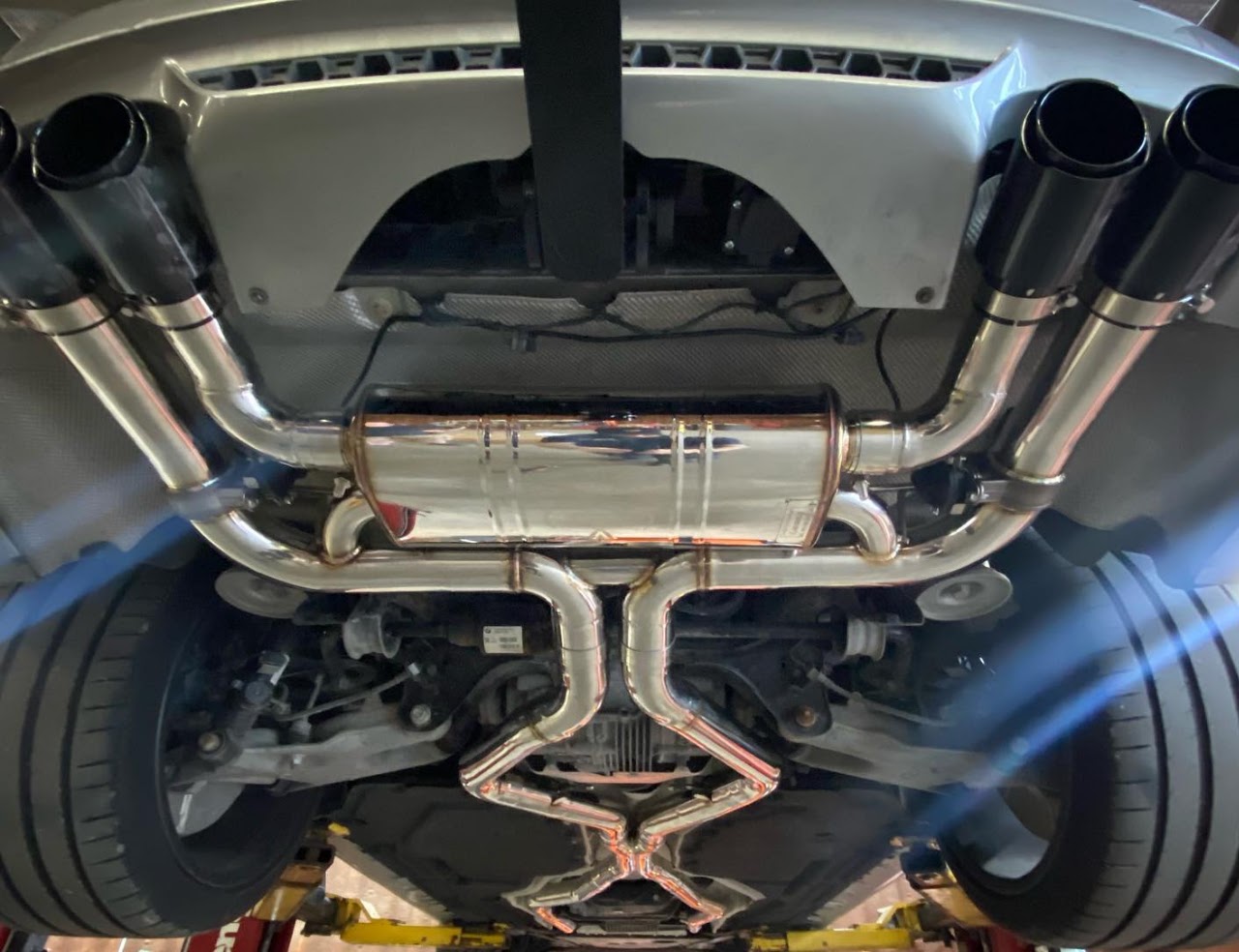
- Custom welding and fabrication
Signs you may need this
- Louder-than-normal exhaust
- Rattle from underneath
- Exhaust smell inside the cabin
Understanding your exhaust system
Your exhaust system reduces harmful emissions, directs exhaust gases away from the engine, and keeps engine noise in check. Understanding how it works and spotting issues early helps keep your car performing right and legal.
How the exhaust system works
- Exhaust manifold: Collects exhaust gases from the cylinders and directs them into the exhaust system.
- Oxygen sensors: Measure oxygen levels in the exhaust so the engine computer can adjust the fuel mixture for performance and emissions.
- Catalytic converter: Reduces harmful emissions by converting toxic gases into less harmful substances like CO₂ and water vapor.
- Muffler: Reduces engine noise by dissipating sound waves and channeling gases out of the vehicle.
- Resonator: Some vehicles use a resonator to further quiet the exhaust and cut drone at cruising speeds.
- Exhaust pipe: Carries exhaust from the engine to the back of the vehicle, where it exits.
Signs of exhaust issues
- Loud exhaust noise: New loudness, rattling, or hissing usually means a hole, crack, or leak somewhere in the system.
- Rotten egg smell: A strong sulfur odor can point to a failing catalytic converter or a rich fuel mixture.
- Check engine light: Faulty oxygen sensors or a bad cat can trigger the check engine light.
What to do
If you notice any of the signs above, schedule an inspection. We'll diagnose the source, recommend the right repair, and — if needed — fabricate and weld to fit older or modified vehicles.
Have something not listed?
If you don't see the service you need, reach out — chances are we do it.
Contact us