← All services
Alignments
Recommended interval
Check alignment once a year, when you install new tires, or after any suspension work or curb strike.
What's included
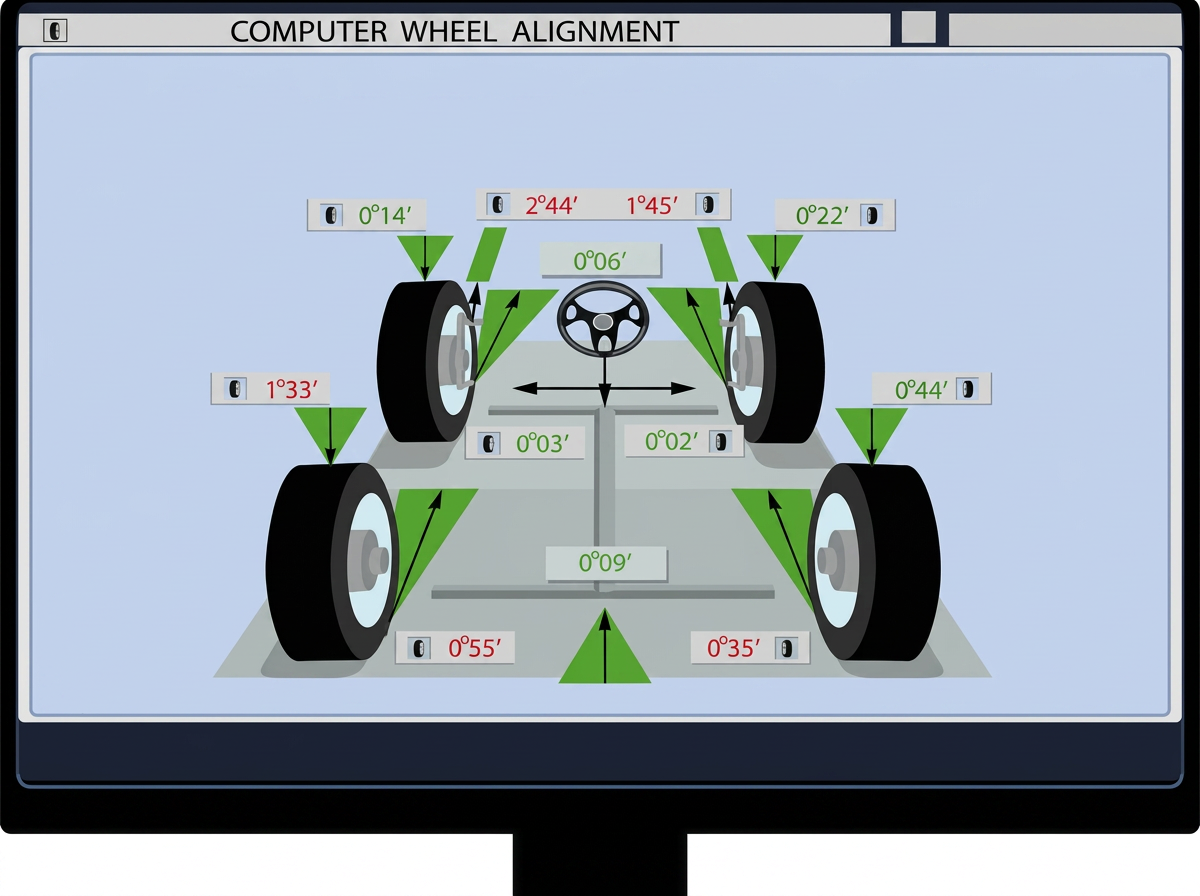
- Four-wheel computerized alignment
- Camber, caster, and toe adjustment
- Steering wheel centering
- Before-and-after printout
Signs you may need this
- Vehicle pulls to one side
- Steering wheel off-center
- Uneven tire wear
Understanding wheel alignments
Your wheel alignment plays a huge role in handling, tire wear, and fuel efficiency. When alignment is right, the car drives smooth and straight. When it's off, you'll see uneven tire wear, poor handling, and worse MPG.
What is wheel alignment?
Alignment is the adjustment of the suspension components that connect the wheels to the vehicle. Proper alignment keeps the wheels perpendicular to the ground and parallel to each other, maximizing tire contact with the road.
Signs your wheels may be misaligned
- Uneven or rapid tire wear: Especially on the inner or outer edges of the tread.
- Pulling to one side: The vehicle drifts even when you're holding the wheel straight.
- Off-center steering wheel: The wheel sits crooked while you're driving straight down the road.
- Steering wheel vibration: Shakiness in the wheel can point to alignment or balance issues.
What to do
- Don't ignore it: Ignoring alignment leads to premature tire wear and worse handling.
- Check your tires: Look for uneven wear on the inner or outer edges — a classic sign of misalignment.
- Schedule an alignment: We'll use our alignment rack to bring everything back to manufacturer spec.
- Stay on top of it: Regular alignment checks — especially after new tires or suspension work — keep your car driving right.
Have something not listed?
If you don't see the service you need, reach out — chances are we do it.
Contact us